Mechanical Weeding: Old school, or ahead of its time?
Old school, or ahead of its time? What the HortWeek data really says about mechanical weeding. Read closely, HortWeek's new survey of UK councils is good news for glyphosate alternatives
Old school, or ahead of its time? What the HortWeek data really says about mechanical weeding
Read closely, HortWeek's new survey of UK councils is good news for glyphosate alternatives, and especially for mechanical weeding.
On 22 October, HortWeek published the results of Freedom of Information requests to 362 local authorities, asking which non-glyphosate methods they use and which they have tried and rejected (HortWeek, 22 October 2026). Around three-quarters replied. It is a valuable dataset, and HortWeek deserves credit for gathering it.
The headline most readers will take away is that alternatives are failing and councils are "falling back" on traditional methods. We read the same figures differently. Looked at from the other side of the ledger, they show one method doing almost everything councils ask of it, and a set of newer technologies being judged on evidence that may be years out of date.
The number that got lost: 14
Of all the machine-based methods in the survey, mechanical weeding is by far the most used and the least rejected: 187 councils use it, and only 14 have rejected it.
Every thermal and electric method has the opposite balance. Hot foam has 15 users and 119 rejections; electric weeding has 5 users and 66. For each of them, rejections outnumber users by between five and thirteen times. Mechanical weeding is also the second most used alternative of any kind, behind only manual weeding. A method that is widely used and rarely rejected is not a fallback. It is the one that works.
The difference in scale is just as striking. Hot foam has one of the highest profiles of any non-chemical method, yet only 15 councils use it. Mechanical weeding is used by 187, more than twelve times as many. Of the councils that have used or considered each method, 93% kept mechanical weeding, compared with 11% for hot foam.
There is a striking comparison in the same survey. HortWeek found 19 councils that have stopped using glyphosate altogether. That is more councils walking away from glyphosate, the benchmark every alternative is measured against, than the 14 that rejected mechanical weeding.
HortWeek grouped mechanical weeding with the "traditional" methods, set against newer heat and electric technologies. Today's brushes and sweepers are anything but old-fashioned, and the survey's own figures show they are the success story.
The results on the ground back this up. Cambridge City Council went from three herbicide applications a year in 2021 to none in 2023, with specialist mechanical cleansing at the heart of its programme. Hull City Council used weed brushes across 125 streets in 11 wards in its Love Your Neighbourhood scheme, and ordered two more machines within weeks.
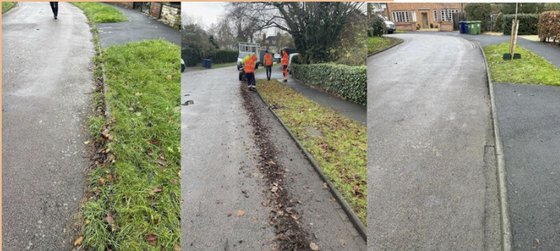
Why mechanical weeding works: it removes the reason weeds grow
Mechanical weeding succeeds because it is not a weedkiller at all. It removes the growing medium.
Weeds on hard surfaces don't grow out of tarmac or concrete. They grow in the layer of silt, leaf litter and grit that builds up along kerb edges, in channels and in paving joints. A herbicide, a hot water lance or a flame kills the plant, but leaves that layer in place, ready for the next seed. A brush or sweeper takes the plant and the soil it was growing in.
That is why judging every method only on how well it kills weeds, compared with glyphosate, misses the point. Mechanical removal is prevention, not substitution.
- Fewer weeds next time. No growing medium means less to germinate in, so regrowth is slower and lighter.
- Healthier drainage. The same detritus that feeds weeds washes into gullies and blocks them.
- Longer-lasting surfaces. Roots that are left to establish open up joints and cracks, letting water in and turning a weed problem into a pothole problem.
Our research on the Bracknell IWM Trial has found that the plant species growing on hard urban surfaces change in a predictable way as detritus gets deeper. Put simply, the depth of the debris layer tells you what will grow, and how hard it will be to remove. Tackle the layer early and you stay ahead of the problem.
The trial also shows what prevention does to chemical use. Across five comparable sites, combining mechanical brushing with precision application cut the active substance used by 49% in the first season (Bracknell IWM Trial). Newport Council has reported the same pattern: sweeping and brushing before spring growth meant fewer weeds and much less glyphosate.

Answering the objections
The reasons councils gave for rejecting each method tell an even clearer story. Of the 14 councils that rejected mechanical weeding, only one said it didn't work. None raised safety, environmental impact or energy and water use. Their objections were cost (5 councils), impractical equipment (4), damage to surroundings (3) and labour (2).
The thermal and electric methods were turned down for the very things mechanical weeding was not. Hot foam was rejected for poor efficacy by 38 councils, and for being labour-intensive or needing repeat treatments by another 38. Flame weeding's biggest single objection was safety, cited by 34 councils.
That doesn't mean thermal methods don't work. It shows what happens when they are judged as a like-for-like replacement for glyphosate, which is not how they work best. We come back to this below.
Each of mechanical weeding's objections has a practical answer.
"It damages surfaces." Three councils cited damage, the same number as for hot foam or electric weeding, yet it led HortWeek's account of mechanical weeding. Some reported brushes lifting tarmac or eroding joints. In our experience, that almost always comes down to set-up rather than the method: the wrong brush for the surface, too much down-pressure, or a surface that was already failing. Matching wire, poly or combination brushes to the surface, and setting the right speed and angle, removes the growth without harming sound tarmac or block paving. And a surface broken up by a single pass of a brush was usually being held together by the roots growing in it. The repair was coming either way.
"The machinery costs too much." Capital cost is a real hurdle for a council budget. But it should be set against what the equipment saves: fewer repeat treatments, less gully cleansing, and fewer carriageway repairs. In our audits of council networks, the conservatively modelled payback for kerb extraction equipment has typically been measured in months, not years. Many councils also already own compatible tractors or sweepers that a weed brush can be fitted to.
"Output is too low." That depends heavily on choosing the right machine for the job. Pedestrian units suit footways and precincts; tractor, sweeper and truck-mounted brushes cover kerb lines at road speed. Because removal lasts longer than a contact treatment, fewer passes are needed across a season, so output per year compares well even when output per hour looks modest.
Two contractors show what this looks like in practice:
- Rejuvo needed clean, solid path edges before repairing footways. Hand tools and pressure washing were slower, and pressure washing risked damaging the surface. With a Kersten UBS weed brush, one operator now clears 500 to 1,000 metres of heavily soiled footpath a day, and Rejuvo has since built a small fleet of machines.
- Veolia compared machine path-edging with conventional methods. A UBS 16 with a weed brush did the job in about half the time, and the machine was estimated to pay for itself after 81 miles of work.


Thermal methods: judged on old evidence?
The survey can't tell us whether a council rejected hot water, foam or electric weeding last year or a decade ago. That matters, because the equipment has changed a great deal.
Three gaps in the data are worth knowing about before drawing conclusions:
- No dates. A trial in 2014 is counted the same as one in 2026. Many of the complaints recorded, such as slow working, high water use and unreliable machines, are the problems manufacturers have spent the last ten years solving.
- No distinction between products. "Hot water" covers everything from a small handheld lance to a high-output machine designed for street work. Grouping them together hides the differences that decide whether a method suits a council.
- Considered is not the same as tried. HortWeek notes that some councils based their decision on other authorities' trials rather than their own, and some figures combine "trialled" with "considered". A rejection without a trial may say more about expectations than results.
Thermal methods have a real place, and used well they work. Hot air, hot water, steam and electric treatments come into their own where a brush can't or shouldn't go: around street furniture and tree bases, on gravel and loose surfaces, in sensitive sites such as cemeteries and playgrounds, and on young regrowth after mechanical removal. Where they disappoint is when they are expected to replace glyphosate directly, everywhere, applied across a whole network on the same schedule. Targeted at young growth, timed to the season, and used once the growing medium has been removed, they perform far better.
We supply mechanical and thermal equipment, so we have no reason to favour one over the other. The honest conclusion is that today's thermal machines deserve a fresh look, on today's evidence.
Flame weeding is a good example. Safety for staff and the public was the most common reason councils gave for rejecting hot lances and weed guns, cited by 34 of the 76. With an open flame near dry vegetation, that concern was fair. The newest machines are designed around it:
- Hoaf Weedair. The flame burns inside an insulated burner box and never touches the ground. A fan spreads the heated air under a hood, where a glowing mesh adds infrared heat. A sensor shows the temperature under the hood, and an emergency stop keeps the fan running to cool the burner. The battery-driven Weedair 75 iBE covers up to 1,125 m² an hour, runs at under 70 dB, and is reported to have no noticeable vibration (Stad en Groen test; Kersten UK, Hoaf range).
- ISKA Hybrid Pro. From Sefmat, the makers of Ripagreen, this hand-held unit heats air inside the machine and directs a controlled stream of it at the plant, with no open flame touching the ground. Its built-in blower clears dry leaves and debris before treatment, removing the very material that creates a fire risk. That makes it suitable for sensitive sites such as cemeteries, schools, playgrounds and hospitals (Kersten UK, ISKA Hybrid Pro).
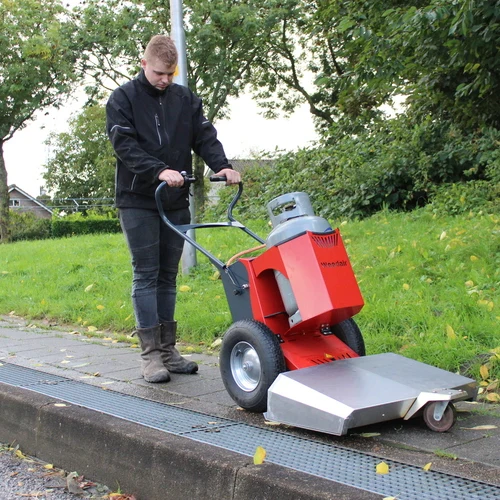

Good practice still matters: clearing dry leaves and litter first, and stopping in high wind or drought. But enclosed-flame machines are a very different proposition from the open burners many councils will have tried.
Hot water has moved on too. In a Bristol Water trial on an invasive pondweed beside a reservoir, where chemicals couldn't be used, low-pressure hot water at 100°C reached through the dense mats of plants better than electric or hot-air treatment.
The real lesson: integrate, don't substitute
The survey's most useful finding is that no single product replaces glyphosate everywhere, and nobody should expect one to.
That is exactly what integrated weed management (IWM) is for. The government's Pesticides National Action Plan and the Amenity Forum both promote it, and HortWeek's report ends on the same note. IWM starts with prevention, then chooses the right tool for each surface and season:
- Remove the growing medium with mechanical brushes and sweepers, the foundation of the programme.
- Target what remains with heat, electric or, where justified, chemical treatment, at the right growth stage.
- Treat invasive species such as Japanese knotweed as a specialist job, under their own plan.
- Measure the results, including complaints, gully blockages and surface repairs, not just how a street looks after treatment.
Run this way, the costs that worry councils in the survey start to come down. Fewer treatments are needed, each one lasts longer, and the savings show up in drainage and highway budgets as well as the weed control budget.
What councils can do next
If your council rejected an alternative some years ago, the most useful thing you can do now is look again.
- Check when, and how, the decision was made. Was it based on your own trial, on current equipment, and on a method used as part of a plan rather than a straight swap?
- See current kit working on your own streets. A demonstration on your surfaces, with your weeds, is worth more than any survey.
- Get the baseline first. An independent audit of your network shows where detritus is building up, what it is costing you, and which mix of methods will pay back fastest.
With glyphosate's approval under review, councils that plan now will have choices. Those that wait for a ban will have deadlines.
To arrange a demonstration or talk about an audit, contact Kersten UK.
Source: The future of weed control: Are glyphosate alternatives for amenity weed control fit for purpose? HortWeek, Christina Taylor, 22 October 2026.

No comments yet. Login to start a new discussion Start a new discussion